
AI Image Creation
Not long ago, creating high-quality images required specialized skills. Designers spent hours sketching concepts, photographers staged scenes carefully, and illustrators refined details pixel by pixel.
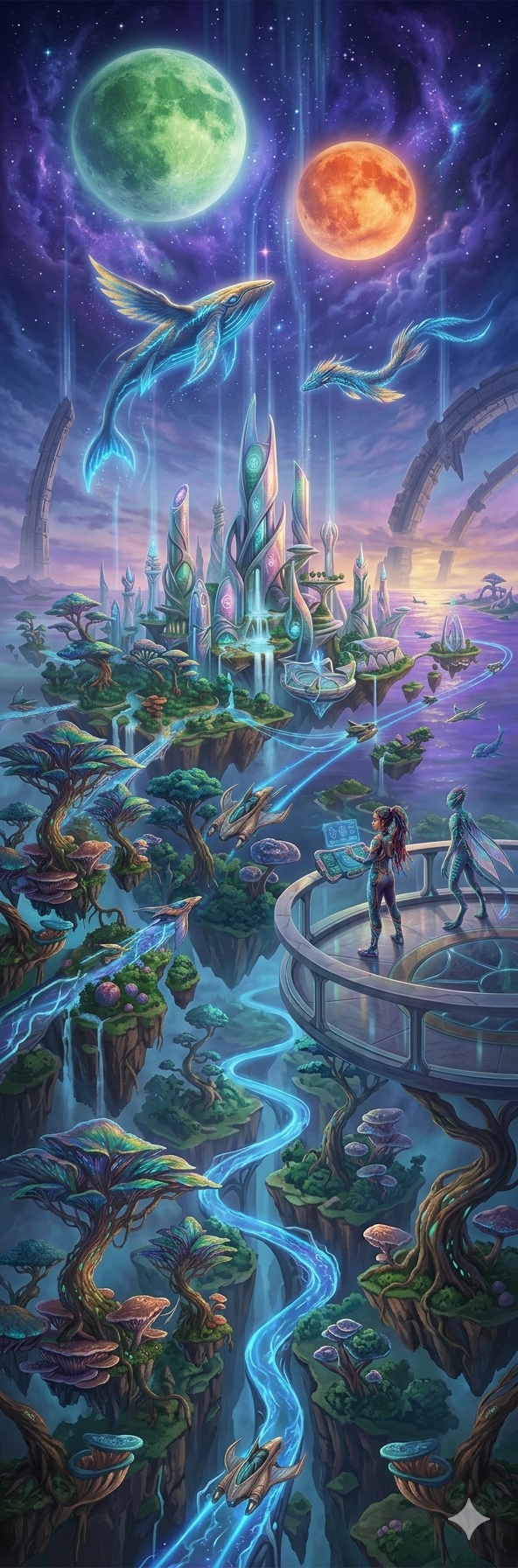
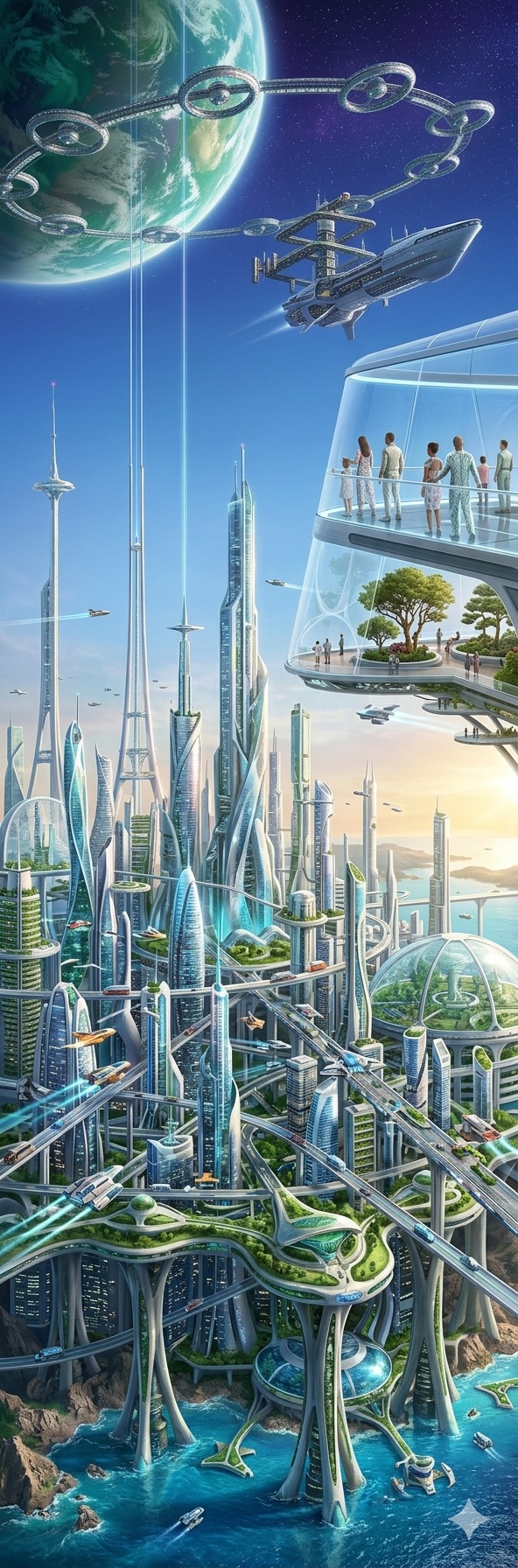
Today, a growing number of images on the internet begin with something much simpler: a sentence. Type a description into an AI tool such as — “a futuristic city skyline at sunset with flying cars” — within seconds, a detailed image appears. No camera. No drawing tablet. No design software expertise required.
This shift marks one of the most dramatic changes in digital creativity in decades. AI-powered image creation is transforming how visual content is produced, who gets to create it, and how quickly ideas can move from imagination to reality. But while the technology looks almost magical from the outside, understanding how it works—and how to use it responsibly—is becoming an important skill to have for creators and businesses alike.
The Technology Behind AI Image Generation
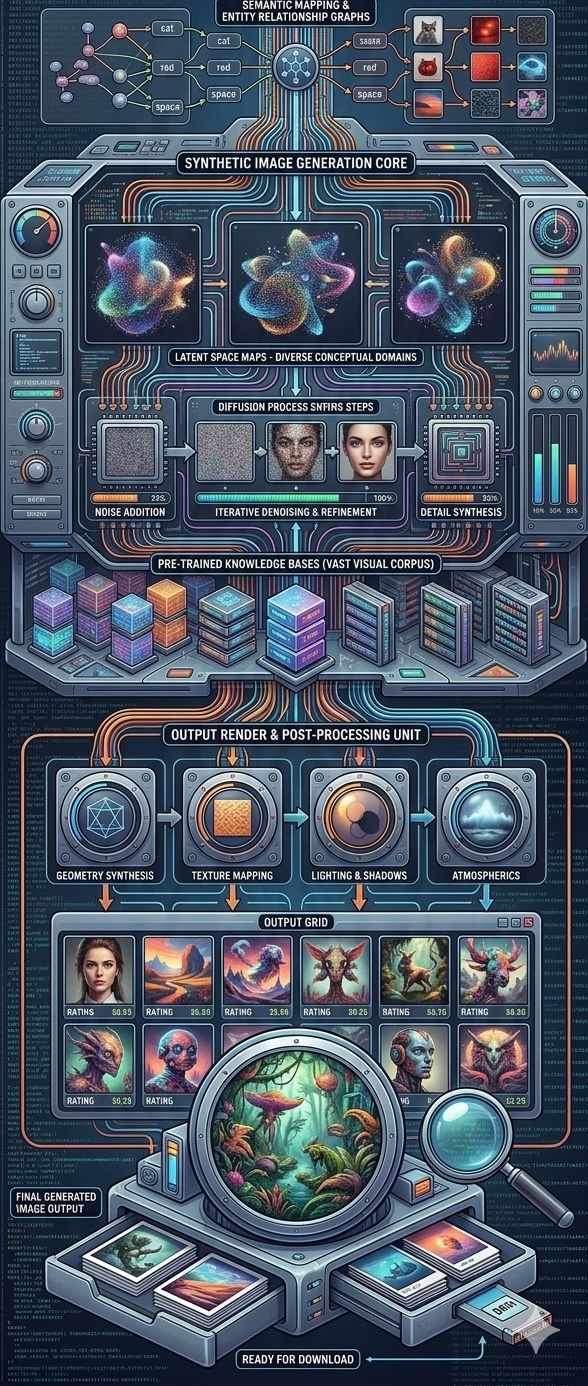
AI-generated images are created using advanced machine learning models trained on vast collections of images and their associated descriptions.
Modern systems typically rely on diffusion models, a type of AI that learns how to gradually transform random visual noise into meaningful images based on a text prompt.
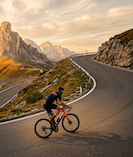
When you type a prompt like: “A cinematic photo of a mountain road with a cyclist during golden hour” — The AI analyzes the description, identifies key visual elements—lighting, environment, objects—and generates an image that reflects those characteristics. What once required complex graphic design workflows can now be initiated with a few words.
How People Are Using AI Image Tools ?
AI-generated imagery is quickly becoming part of everyday workflows across industries. Bloggers, journalists, and online publishers use AI tools to generate custom illustrations that complement their articles. Instead of relying on generic stock photos, creators can produce visuals tailored to the specific topic they’re discussing.
Marketing teams increasingly rely on AI-generated visuals for campaign concepts, social media graphics, and promotional content. The ability to rapidly generate multiple visual styles makes experimentation easier and less expensive.
Businesses use AI to create mock-ups and product images before physical products even exist. This allows teams to test ideas, present concepts to stakeholders, and refine designs earlier in the development process.
Professional designers often use AI tools during the early stages of creative exploration. Generating multiple visual directions quickly helps designers identify promising ideas before committing to detailed production work.
Widely Used AI Image Generators in 2026
The best AI image generator ultimately depends on the type of project being created. Creative professionals often gravitate toward tools like Midjourney or Leonardo AI for artistic exploration.
Businesses focused on branding and marketing may prefer Adobe Firefly or DALL·E for reliable, commercially appropriate visuals.
Developers and technical users may find Stable Diffusion more appealing because of its flexibility and customization options.
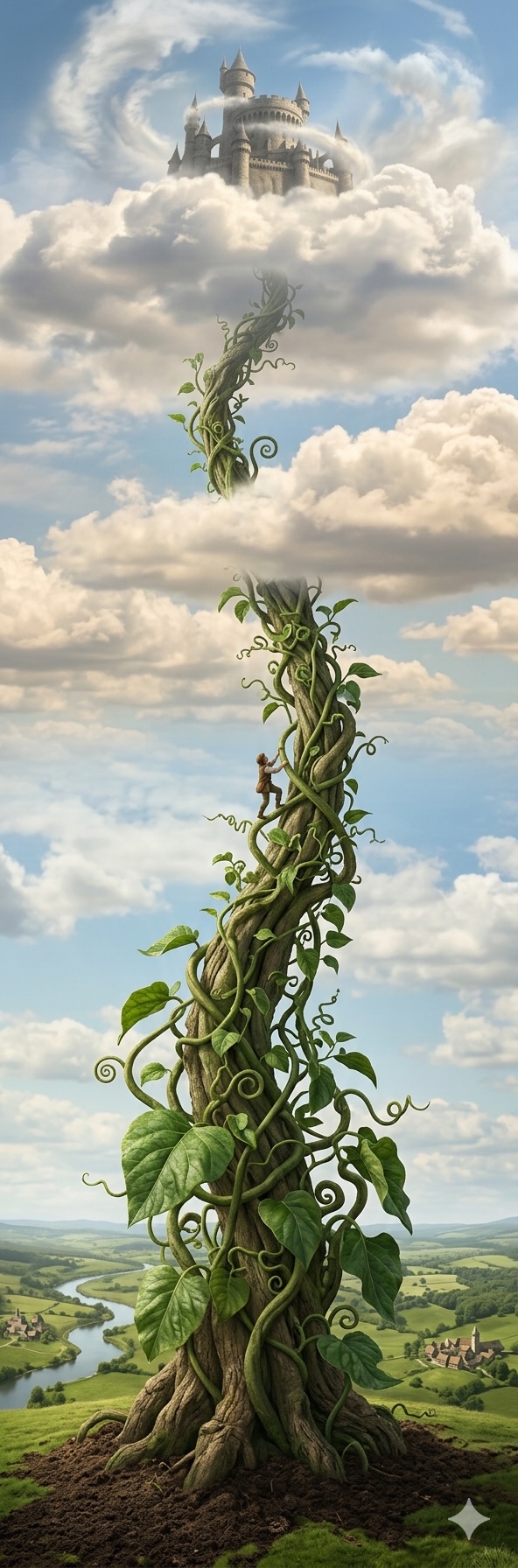
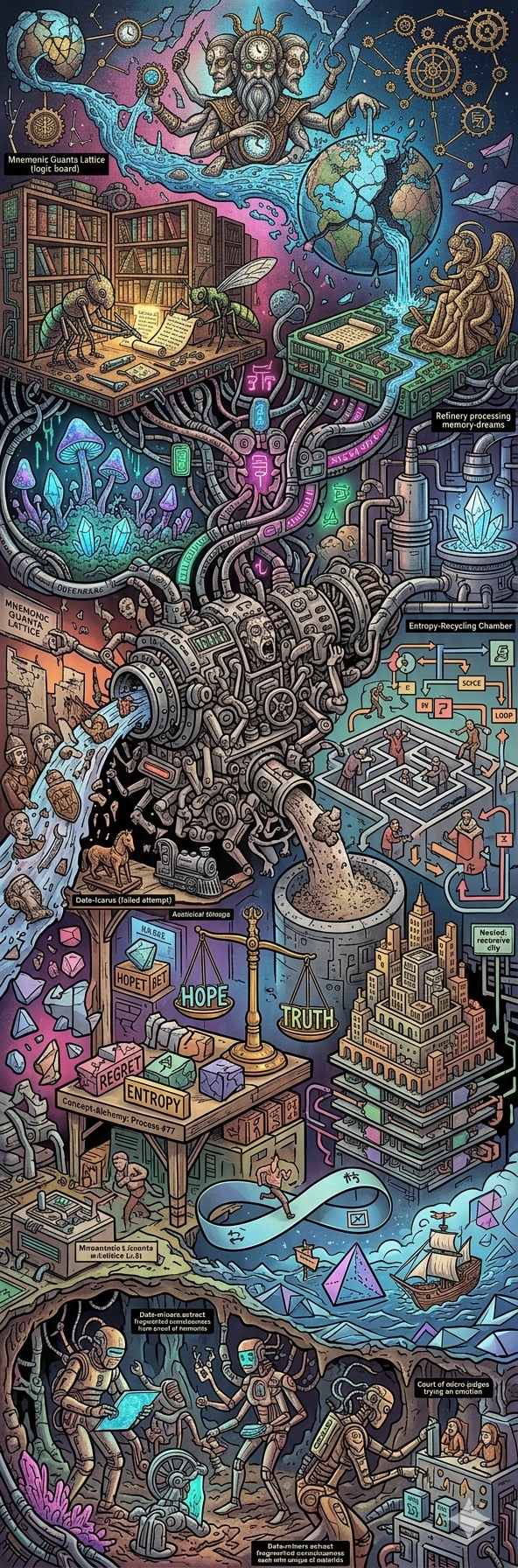
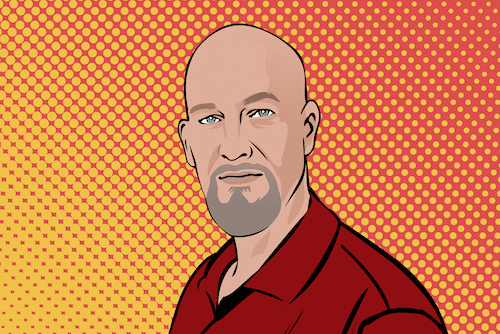
However, newer users will likely find OpenAI or Google Gemini more accessible. All of the images in this blog post were created using Gemini.
Why AI Image Creation Is Growing So Quickly
Several factors have contributed to the rapid adoption of AI image generation:
- Speed: What once took hours or days can now happen in seconds. AI allows creators to generate dozens of visual concepts almost instantly.
- Lower Cost: Traditional visual production often involves photographers, designers, or illustrators. AI tools significantly reduce these costs, particularly for early-stage content creation.
- Accessibility: Perhaps the most significant change is accessibility. AI image tools make visual creation available to people who have never studied design or illustration.
Entrepreneurs, educators, developers, and small business owners can now produce professional-looking visuals without specialized training.
The Limitations of AI-Generated Images
Despite the excitement surrounding AI image tools, they are not perfect. AI sometimes struggles with precise control. Complex scenes, exact brand guidelines, or detailed product specifications may still require human design expertise.
Rendering readable text or consistent small details remains a challenge for many AI image models.
AI image generation has also sparked debates about intellectual property. Since many models are trained on large datasets of existing artwork and photographs, questions about ownership and fair use continue to evolve.
In response, some companies are developing tools to track AI-generated content and ensure transparency.
AI as a Creative Partner
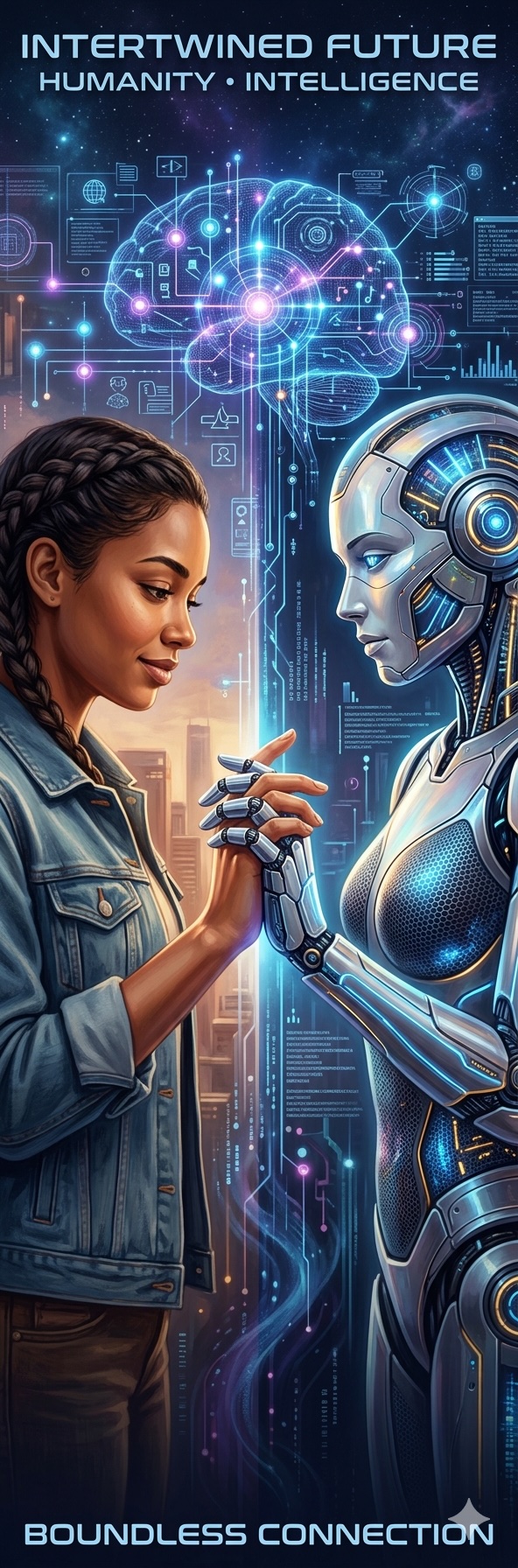
Rather than replacing designers or artists, AI is increasingly becoming a collaborative tool.
Many creative professionals now follow a hybrid workflow using AI to generate initial visual concepts:
- Select promising images.
- Refine and polish them using traditional design tools.
- Add human creativity and brand-specific details.
Used in this way, AI accelerates the early stages of creativity while humans guide the final outcome. The result is a workflow that is both faster and more flexible.
What the Future May Look Like
AI-generated imagery is still evolving rapidly. Over the next few years, we are likely to see:
- AI-generated video from simple prompts
- Real-time image editing powered by AI
- Personalized visual content tailored to individual users
- Integration of AI visuals into AR and VR environments
As these tools improve, the boundary between imagination and visual creation will continue to shrink.
Conclusion
AI image creation is changing how visuals are produced across the internet and beyond.
By allowing people to transform ideas into images almost instantly, AI tools are expanding who gets to participate in digital creativity. However, while the technology is powerful, the most effective results still come from combining AI capabilities with human judgment and creativity. AI can generate the image. Humans decide what the image should mean.
If you have any questions about this post please contact us today so we can help you figure out how to stay ahead of the curve.

 10400 Connecticut Ave #411
Kensington, MD 20895
10400 Connecticut Ave #411
Kensington, MD 20895